Source Commercial Bathroom Phenolic Board for Restrooms
Find 30 commercial bathroom phenolic board options from manufacturers in China. Compare specifications like thickness, certifications, and packing details to select the right material for your project needs. Evaluate grades, formaldehyde standards, and custom sizes to ensure durability and compliance for high-traffic wet areas in modern facilities.
Key considerations
Products List







Comprehensive Sourcing Guide
Commercial Bathroom Phenolic Board Sourcing Guide
Procuring commercial bathroom phenolic board requires distinguishing between generic laminate products and specialized high-pressure boards designed for wet environments. The observed market data indicates a diverse range of offerings, including specific phenolic foam boards and compact laminate variants, often originating from manufacturing hubs in Guangdong and Jiangsu provinces. Buyers must carefully navigate these distinctions to ensure the selected material meets the rigorous durability and moisture resistance demands of public restrooms.
The sourcing landscape presents significant variation in product attributes, with some listings specifying "New" condition while others note "Used" status, creating potential confusion for procurement teams. Additionally, the availability of customization options ranges from fully tailored dimensions to standard non-customized stock items. Understanding these baseline differences is essential before engaging with suppliers, as the intended application dictates whether a standard 1830*2440mm sheet or a custom-sized partition panel is the appropriate choice for the project.
Product Scope and Observed Listing Signals
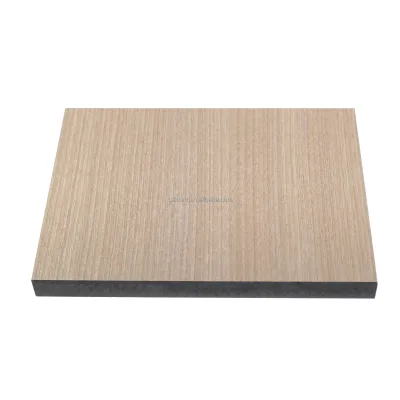
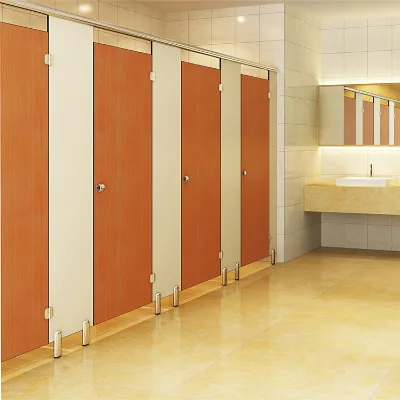
Buyers should first verify the specific material composition, as the market includes both standard wooden-based laminates and dedicated phenolic boards. The observed listings highlight "Phenolic Board" and "Compact Laminate Board" as distinct categories, with some products featuring stainless steel 304 accessories and others utilizing standard hardware like locks and hinges. This distinction is critical because phenolic boards typically offer superior water resistance compared to standard melamine or wooden laminates, making them the preferred choice for high-traffic commercial bathrooms.
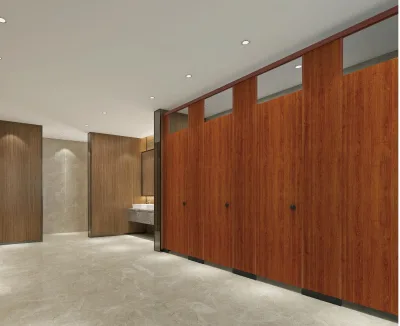
Visual and structural attributes also vary significantly across available inventory, with styles ranging from modern and simple to antique and American designs. Color options observed include black and brown, while surface finishes may feature aluminum foil embossing or grooved edges. Procurement teams must align these aesthetic choices with the facility's design requirements while ensuring the physical shape, whether irregular or standard panel, fits the intended partition or wall cladding application without requiring excessive on-site modification.
Technical Specifications to Verify
Dimensional accuracy is a primary verification point, as observed listings show standard sheet sizes like 18302440mm alongside custom dimensions such as 9001500*2400mm. Buyers must confirm whether the supplier provides standard thicknesses like 12mm or 18mm, or if the project requires specialized thicknesses up to 150mm for specific structural applications. The presence of "Customized" tags in product descriptions suggests flexibility, but the final order must explicitly state the required length, width, and thickness to avoid receiving mismatched components for the bathroom layout.
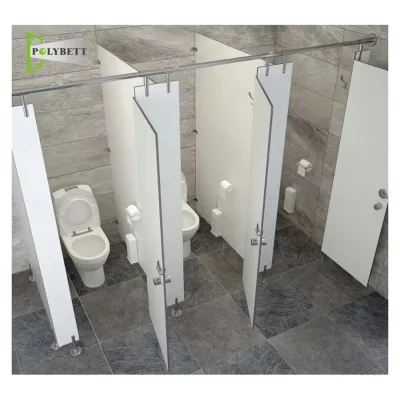
Hardware and accessory compatibility must also be scrutinized, as the listings indicate the inclusion of locks, hinges, corner fasteners, and headrails. Some products are specified as "DEBO toilet cubicle" systems, implying a complete assembly approach, while others are raw boards requiring separate hardware installation. Verifying that the included accessories match the board's thickness and that the packaging, such as free-fumigation wooden boxes or standard pallets, protects the material during transit is essential for maintaining product integrity upon arrival.
Compliance and Safety Documentation
Formaldehyde emission standards are a critical compliance factor, with observed data explicitly citing E1 standards for certain board types. Buyers should request test reports confirming that the formaldehyde emission levels meet the E1 threshold or any stricter local regulations, as this directly impacts indoor air quality and occupant health in enclosed bathroom spaces. While some listings mention various glue types like MR, E0, or WBP, the specific emission rating must be validated through third-party documentation rather than relying solely on the product title.
Certification status requires careful verification, as the data presents conflicting signals with some entries listing ISOCE and others noting "ISOCondition:Used." Procurement teams must demand current, valid ISO certificates that specifically cover the manufacturing process for the phenolic board being purchased. Relying on outdated or ambiguous certification labels can lead to non-compliance with building codes, so buyers should insist on seeing the actual certificate number and the scope of coverage to ensure the product meets international safety and quality benchmarks.
Cost Drivers and Commercial Terms
Pricing in this sector is heavily influenced by the degree of customization and the specific material grade selected. The observed price range spans from $4.5 to $300, reflecting the difference between basic raw boards and fully finished, custom-sized cubicle systems. Buyers should anticipate higher costs for phenolic boards with specialized surface finishes like aluminum foil embossing or those requiring custom dimensions, as these processes add significant value and production time compared to standard stock items.
Minimum Order Quantities (MOQ) and packaging requirements also drive the total cost of ownership, with observed MOQs ranging from 45 square meters to as low as one unit depending on the supplier. The choice between wood pallets, free-fumigation wooden boxes, or carton and pallet combinations affects shipping logistics and potential damage risks. Procurement teams must calculate the total landed cost by factoring in these packaging fees and MOQ constraints, ensuring that the order volume justifies the shipping method and meets the project's budgetary limits.
Supplier Qualification and Quality Control
Supplier identity and location are key indicators of reliability, with the majority of observed listings originating from major manufacturing regions like Foshan, Guangdong, and Jiangsu. Buyers should prioritize suppliers who explicitly state their enterprise style as "Manufacturer" rather than trading companies, as this often correlates with better quality control over the production process and more direct communication regarding technical specifications. Verifying the physical location helps in assessing the supply chain stability and potential lead times for custom orders.
Quality control protocols must be established before finalizing any purchase, particularly given the mixed data regarding product conditions like "New" versus "Used." Buyers should implement a pre-shipment inspection plan that verifies the physical condition of the phenolic boards, checks for surface defects like irregular shapes or damaged edges, and confirms the accuracy of the provided dimensions. Establishing clear acceptance criteria for the Grade B or higher quality materials ensures that the delivered products meet the functional requirements of the commercial bathroom environment.
Long-Term Procurement Checks
Warranty terms and after-sales support are vital for long-term asset management, with observed listings indicating a standard one-year warranty period. Buyers should negotiate extended warranty coverage for high-traffic commercial installations, as phenolic boards are expected to withstand constant moisture exposure and heavy usage. Clarifying what the warranty covers, such as delamination or hardware failure, and understanding the claim process is essential for protecting the investment against premature product failure.
Future maintenance and replacement compatibility should also be evaluated to ensure the longevity of the bathroom infrastructure. Since the market offers various series like the 77, 99, and 13 series, buyers must confirm that replacement parts or additional panels will be available from the same supplier in the future. Maintaining a relationship with a manufacturer who can provide consistent product specifications and matching accessories ensures that the facility can be easily maintained or expanded without the need for costly system-wide replacements.
FAQs
What is a commercial bathroom phenolic board toilet partition?
It is a compact laminate panel made from kraft paper impregnated with phenolic resin and pressed under high pressure, used for toilet cubicle partitions in commercial restrooms. The dense core resists moisture, impact, and graffiti, and panels are typically 12 or 18 millimeters thick, with customized thicknesses also available for specific project requirements.
Which thickness should I choose for toilet partitions?
Most commercial restroom projects use 12mm panels for standard cubicle dividers and 18mm panels for doors, pilasters, and high-traffic areas requiring extra strength. Customized thicknesses are also available, so match panel thickness to span width, mounting hardware, and expected usage intensity before finalizing your specification.
Can the boards be customized in size and color?
Yes, customization is available for both dimensions and appearance. Standard sheet sizes such as 1830x2440mm are commonly offered, and partition sizes like 900x1500x2400mm can be customized. Colors including black and brown in modern or other styles can be produced, so confirm available finishes, grooved edges, and hardware options with each supplier.
What hardware is typically included with phenolic board cubicles?
A complete cubicle set usually includes locks, hinges, corner fasteners, headrails, and legs, with stainless steel 304 accessories commonly used for corrosion resistance in humid restroom environments. Confirm which hardware items are supplied with the panels, whether installation instructions are included, and if stainless steel grades can be adjusted for coastal or heavily used facilities.
How are the boards packed for shipping?
Packing varies by supplier but commonly includes wooden pallets, free-fumigation wooden boxes, or carton and pallet combinations. Wood pallet packing protects large sheets during container transport, while fumigation-free boxes simplify customs clearance. Always confirm the packing method, pallet dimensions, and container loading quantity before placing an order to avoid damage or unexpected freight costs.
Which certifications should I check before ordering?
Look for ISO certification as a baseline quality indicator and confirm formaldehyde emission standards, with E1 being a common requirement for indoor use. Ask for test documentation covering the glue type, such as E0, E1, E2, melamine, or WBP options, and request current certificates directly from the manufacturer before finalizing your purchase decision.
What is the typical minimum order quantity for these boards?
Minimum order quantities vary widely, from single-piece samples to 45 square meters or up to 200 pieces depending on the supplier and product type. Manufacturers usually accept small trial orders for standard 1830x2440mm sheets, while customized partition systems may require larger commitments. Request exact MOQ terms and sample policies when comparing suppliers.
Where are these products mainly manufactured?
Listed products originate from Guangdong, China, including Foshan, and Jiangsu, China, which are established manufacturing regions for compact laminate and phenolic board products. Guangdong suppliers often provide customization services and modern styles, so compare origin, production capacity, and export experience across manufacturers when building your shortlist.